

Acrylic Gel Medium Explained: Matt vs Gloss – What’s the Difference?
Pebeo Auxiliaries Artist Acrylic Gel Matt/ Gloss
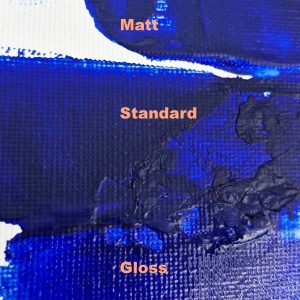
Use your existing blue Matt / Standard / Gloss photograph here.
Caption: A comparison of matt, standard and gloss acrylic paint finishes, demonstrated by Local Art Shop.
Ever wondered why two paintings made with the same acrylic colour can look so different? One may have a soft, matt finish while another catches the light and appears much glossier.
The answer is often the medium mixed with the paint.
Acrylic gel mediums are one of the most useful additions to an artist’s materials collection. They allow you to change the consistency, transparency, texture and finish of acrylic paint without simply diluting it with water.
In this guide, we’ll look at how acrylic gel mediums work, the differences between Matt and Gloss Gel, and how to choose the right one for your painting.
What Is Acrylic Gel Medium?
Acrylic gel medium is a thick acrylic-based medium that can be mixed with acrylic paint or, where suitable, applied on its own.
Unlike adding water, which makes paint more fluid, a gel medium allows you to increase the amount of acrylic binder while maintaining a more substantial consistency.
This is especially useful when you want to create texture, retain brush marks or work with a painting knife.
Depending on the particular gel, it can help you:
-
Increase the volume of your paint mixture.
-
Make colour more transparent without excessively thinning it.
-
Retain brushstrokes and painting knife marks.
-
Create textured or raised effects.
-
Change the surface finish from matt to glossy.
-
Incorporate suitable collage materials into mixed-media artwork.
Different gels behave differently, so choosing the correct medium is important.
Matt vs Gloss Acrylic Gel – The Difference You Can See
The difference between Matt and Gloss Gel is not simply about colour. It is also about how light reflects from the painted surface.
Your choice of medium can dramatically change the appearance of the same acrylic colour.
Matt Gel – A Softer, Less Reflective Surface
Matt acrylic gel is designed to reduce surface shine.
This can be particularly useful when painting subjects where strong reflections would be distracting, such as subtle landscapes, portraits or areas of shadow.
A matt finish can also help reduce uneven gloss across a painting.
However, matt mediums can affect the appearance of dark or highly saturated colours. Depending on the mixture and application, colours may appear slightly lighter or less intense after drying.
Choose Matt Gel when you want:
-
Reduced surface reflections.
-
A softer-looking finish.
-
Textured painting without excessive shine.
-
Greater control over the sheen of an acrylic painting.
Gloss Gel – Depth, Shine and Colour Richness
Gloss acrylic gel produces a more reflective surface.
It can enhance the apparent depth and richness of acrylic colours, particularly darker shades.
When used with transparent acrylic colours, Gloss Gel can also be useful for building luminous layers and textured effects.
Choose Gloss Gel when you want:
-
A shiny, reflective finish.
-
Greater apparent colour depth.
-
Transparent layers with a glossy appearance.
-
Expressive painting knife work and raised textures.
Gloss Gel is not the same as an acrylic gloss varnish. A gel is primarily used as a painting medium, while a varnish is intended as a finishing product with its own application and protection characteristics.
Standard Acrylic Paint – Your Starting Point
The middle sample in our comparison is labelled Standard.
It provides a useful visual reference for comparing the surface finish of paint with different gel mediums.
Remember that ordinary acrylic paints do not all dry to the same sheen. Some are naturally more matt, while others have a satin or glossy appearance.
The final effect will depend on the paint, medium, proportions, surface and application technique.
Why Use Gel Medium Instead of Water?
Water and acrylic gel medium serve different purposes.
Adding water reduces the viscosity of acrylic paint, helping it flow more easily.
Adding gel medium introduces additional acrylic binder and can extend the paint while preserving a thicker consistency.
For example, if you’re creating a textured painting using a painting knife, adding too much water will make it harder to retain raised marks.
A suitable gel medium allows you to extend the paint while keeping the mixture workable for textured applications.
Both water and gel have their place. The best choice depends on the effect you’re trying to achieve.
How to Mix Acrylic Gel Medium with Paint
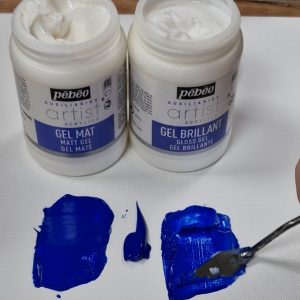
Caption: Mixing acrylic gel medium with paint allows artists to adjust consistency, transparency and surface finish.
Step 1 – Start with Your Acrylic Colour
Place a small amount of paint on a palette or mixing surface.
Step 2 – Add Your Chosen Gel
Add a little Matt or Gloss Gel and mix thoroughly with a painting knife.
Step 3 – Adjust the Mixture
Gradually add more gel until you achieve your preferred consistency, transparency and finish.
There isn’t one universal mixing ratio. The appropriate amount depends on the particular paint, medium and effect required.
Step 4 – Apply Your Paint
Use a brush or painting knife to explore the different textures.
Step 5 – Allow It to Dry
Check the final appearance only after the sample has dried thoroughly.
Acrylic gels can look cloudy or milky while wet, and their appearance can change considerably as the water evaporates.
A Useful Experiment to Try
Take one acrylic colour and divide it into three samples:
-
Paint on its own.
-
Paint mixed with Matt Gel.
-
Paint mixed with Gloss Gel.
Use the same surface and similar application thicknesses, then compare the samples after drying.
Try looking at the painting from different angles under the same light source.
You’ll often find that differences in surface sheen become more noticeable when the light catches the texture.
Can Acrylic Gel Medium Make Paint More Transparent?
Yes.
Adding a gel medium generally reduces the concentration of pigment within the mixture, allowing you to extend the colour while increasing its transparency.
This can be useful for layering, translucent effects and certain mixed-media techniques.
However, transparency also depends on the pigment used, application thickness and the particular gel.
Gloss gels often provide greater optical clarity than matt formulations, especially in thicker applications.
For very thin glazing techniques, a fluid acrylic glazing medium may be easier to use than a thick gel.
Does Acrylic Gel Medium Take Longer to Dry?
It can.
Pébéo explains that its Artist Acrylics gels increase the drying time of acrylic colours.
A thin application may become touch-dry relatively quickly, while a thick textured application can take much longer to dry throughout.
Drying depends on:
-
Thickness of the paint and gel mixture.
-
Temperature and humidity.
-
Air circulation.
-
The surface being painted.
-
The particular medium and paint.
Avoid assuming that a textured application is completely dry simply because the surface no longer feels wet.
What Is Special About Pébéo Artist Acrylic Gel?
Pébéo produces several types of acrylic mediums, including Matt and Gloss gels in its Artist Acrylics range.
These gels are designed to increase the transparency, depth and volume of acrylic colours while retaining a useful working consistency.
According to Pébéo, its Artist Acrylics gels have a thicker consistency and undergo less shrinkage during drying than its Studio Acrylics gels.
They can also be used for suitable collage and mixed-media applications.
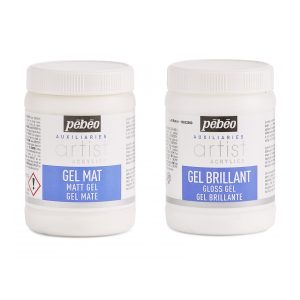
Caption: Pébéo Artist Acrylics Matt Gel and Gloss Gel, available separately in 250ml pots.
The two products are:
Pébéo Artist Acrylic Gloss Gel – 250ml
Manufacturer reference: 521330
Pébéo Artist Acrylic Matt Gel – 250ml
Manufacturer reference: 521530
Both are intended for use with acrylic colours. The main choice is the surface finish you want to achieve.
Which Acrylic Gel Should You Choose?
| Your aim | Recommended gel |
|---|---|
| Reduce surface shine | Matt Gel |
| Enhance gloss and apparent colour depth | Gloss Gel |
| Retain textured brush marks | Either, depending on finish |
| Use a painting knife | Either |
| Create more transparent colour mixtures | Either, with Gloss often offering greater clarity |
| Make particularly thick impasto structures | Consider a dedicated Heavy or Structure Gel |
Neither Matt nor Gloss Gel is universally better. They are different tools for different painting effects.
Common Mistakes When Using Acrylic Gels
Using Too Much Gel Without Testing
A high proportion of gel can change the transparency and appearance of your paint. Start with a small sample.
Expecting Matt Gel to Be Invisible
Matt formulations contain ingredients that reduce reflections. These can affect the appearance of dark colours and thick transparent applications.
Confusing Gel with Varnish
Acrylic gel is not a direct replacement for a purpose-made final picture varnish.
Applying Very Thick Layers and Rushing the Drying
Thick applications can take much longer to dry fully than expected.
Comparing Wet and Dry Samples
Allow samples to dry thoroughly before judging their final colour and finish.
Final Thoughts
Acrylic gel mediums are useful because they give artists more control over how their paint behaves.
Matt Gel is an excellent choice when you want less reflection, while Gloss Gel is useful for richer-looking, more reflective surfaces.
Both can be used to explore textures, transparent layers and painting knife techniques.
The easiest way to understand the difference is to experiment with the same colour and compare the results yourself.
At Local Art Shop, we believe that understanding what a material does is just as important as choosing which one to buy.
Explore the Products
Pébéo Artist Acrylic Matt Gel 250ml
For reduced reflections and a matt finish.
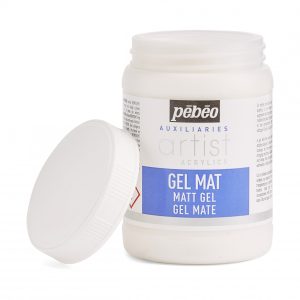
Artist Acrylic Matt Gel
Pébéo Artist Acrylic Gloss Gel 250ml
For glossy texture, transparency and greater apparent colour depth.
[caption width="300" id="attachment_49710" align="alignnone"]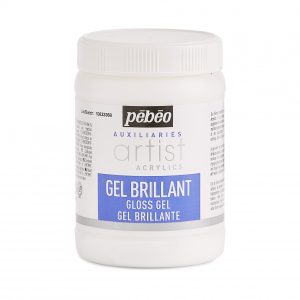 Artist Acrylic Gloss Gel
Both products are sold individually, subject to stock availability.
About Local Art Shop
Local Art Shop is an independent art materials retailer based in Gedling, Nottinghamshire, supplying quality artists’ materials and practical advice.
Our articles are intended to help artists understand the materials they use and make informed decisions about their painting techniques.